The Bob Graham Round
42 Summits, 24 Hours, and a Landscape I Thought I Knew
Last weekend I completed the Bob Graham Round: a circuit of 42 Lake District summits covering around 105km and 8,400m of ascent, all within 24 hours.
For most people, that sentence alone sounds slightly absurd. For fell runners, it's a challenge steeped in history and mythology. For me, it was something I'd been circling around for 3 years.
What surprised me most wasn't the physical challenge itself. It was how differently I experienced a landscape I thought I already knew.
As someone who spends much of my working life studying topography, contour lines and landscapes, I roughly know the shape of the Lake District. I've traced ridgelines across maps, transformed terrain into metal artwork, and spent many hours running and walking in the fells.
But moving through the mountains continuously for almost twenty-four hours reveals a landscape in a completely different way.
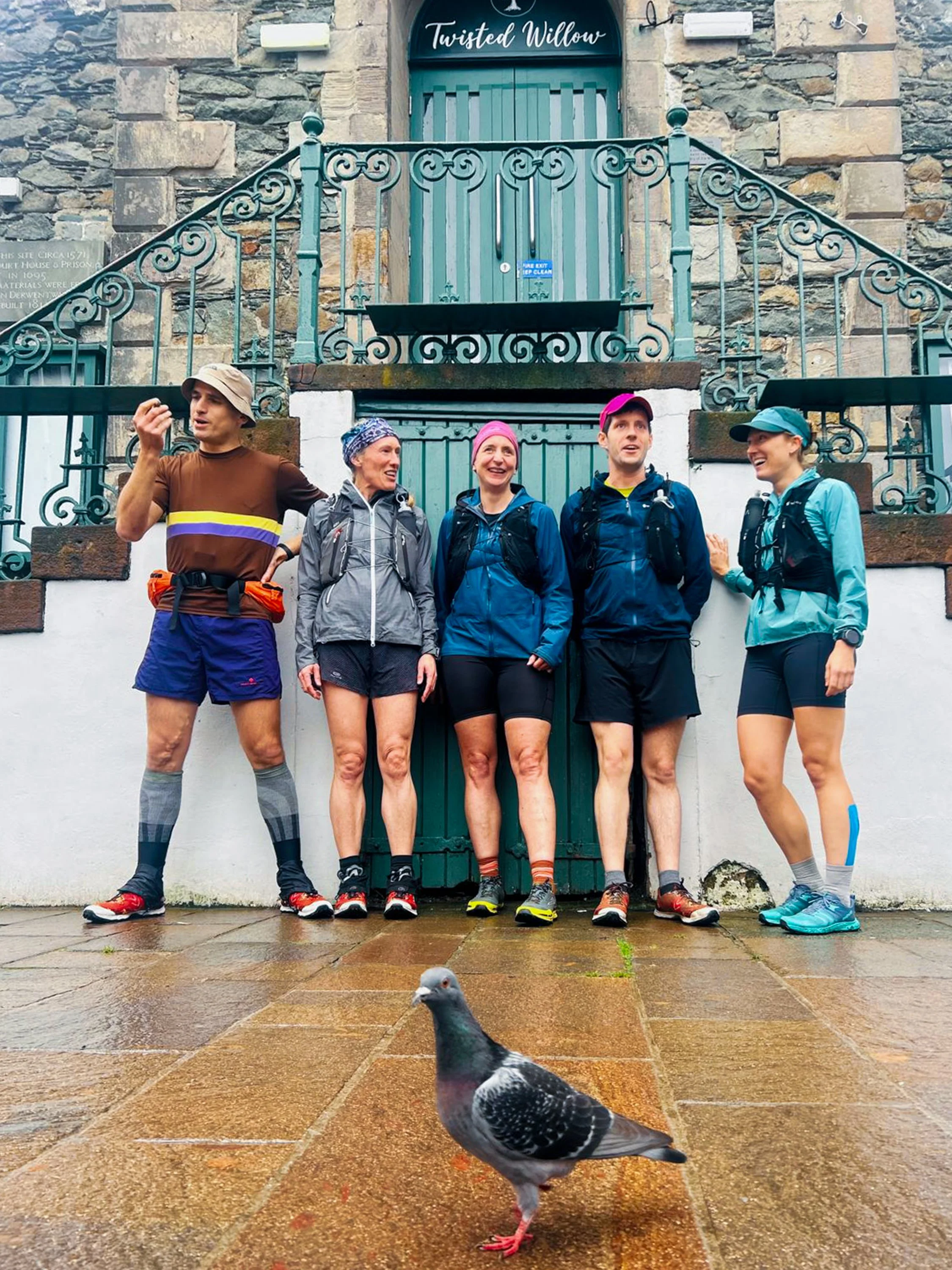
The adventure began at 6:45pm outside Keswick's Moot Hall. Four other Dark Peak runners – Basil, Guy, Tori and Jo – were setting off at the same time, each with an ever-changing team of supporters helping us around the circuit.
I arrived with mixed emotions. Excitement, certainly. But also uncertainty.
Just over four weeks earlier I had sprained my ankle, and while it had recovered remarkably well, I wasn't entirely convinced it was ready for such an undertaking. The sensible decision may have been to postpone. Unfortunately, stubbornness won.
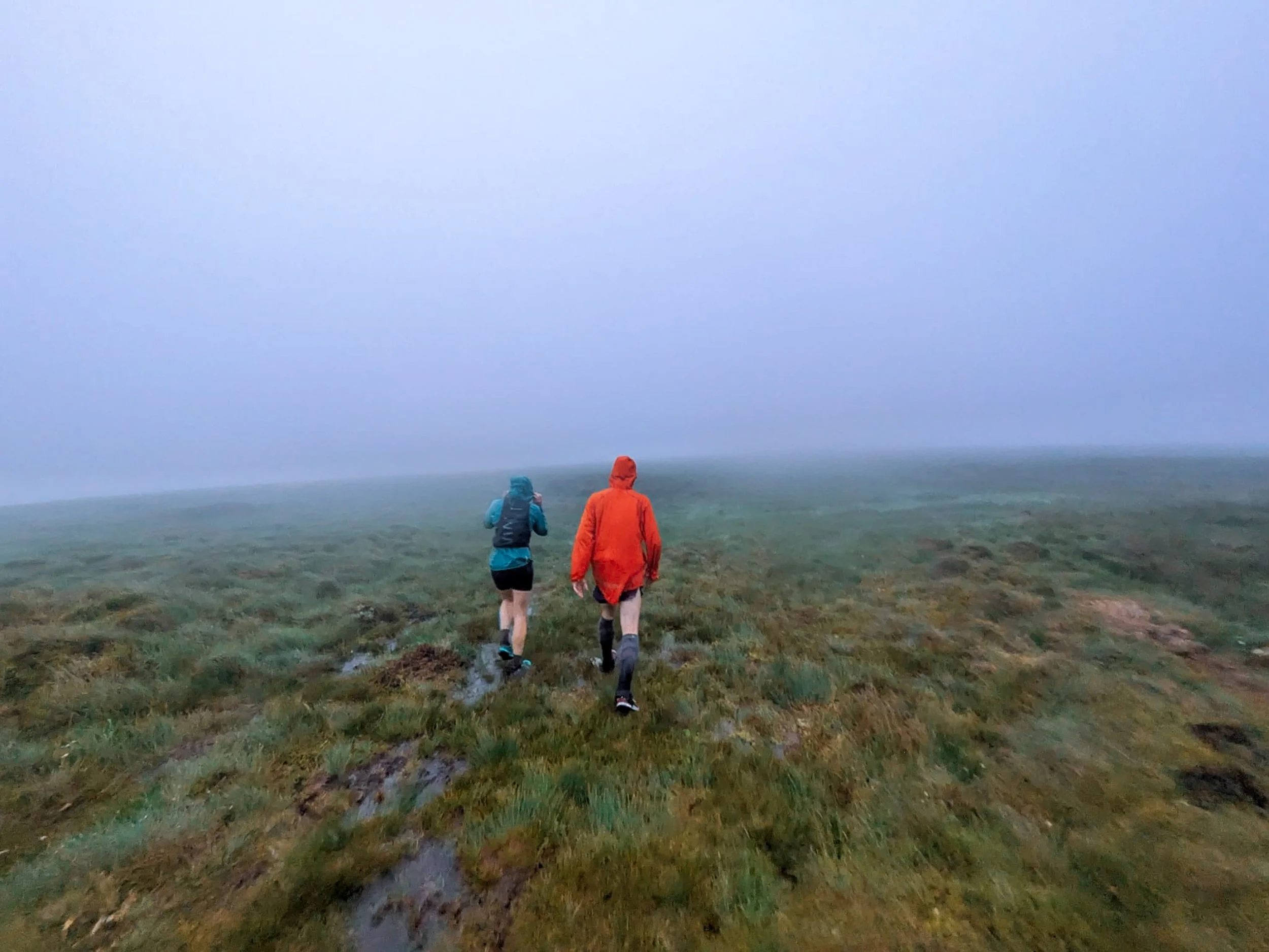
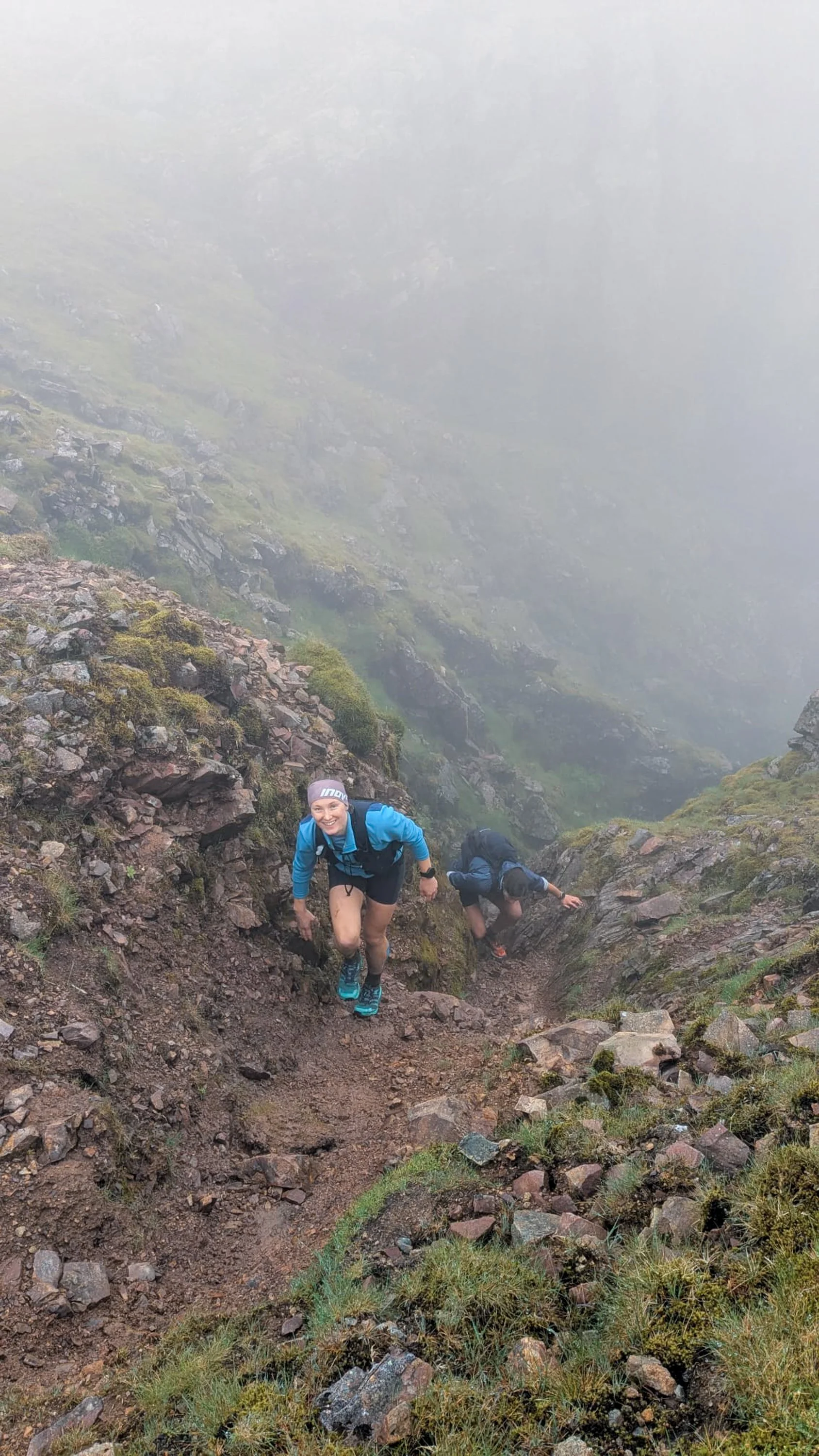
The weather immediately justified every piece of waterproof kit we'd packed. As we climbed Skiddaw, rain lashed across the hillside and the wind drove it into our faces. Rivers were swollen, rocks were slick, and the familiar Lake District terrain demanded concentration from the very first summit.
Yet there was something strangely enjoyable about it.
Perhaps that's one of the reasons people are drawn to challenges like the Bob Graham. In a world where most discomfort can be avoided, there is something refreshing about spending a night moving through wild weather with a group of equally muddy and sleep-deprived companions.
The first half of the round delivered classic Lakeland conditions: thick clag, slippery descents, swollen river crossings and plenty of laughter. Supporters sang sea shanties into the darkness, waterproof trousers suffered an unfortunate structural failure, and several descents involved considerably more bum-sliding than dignified running.
By dawn, however, everything began to change.
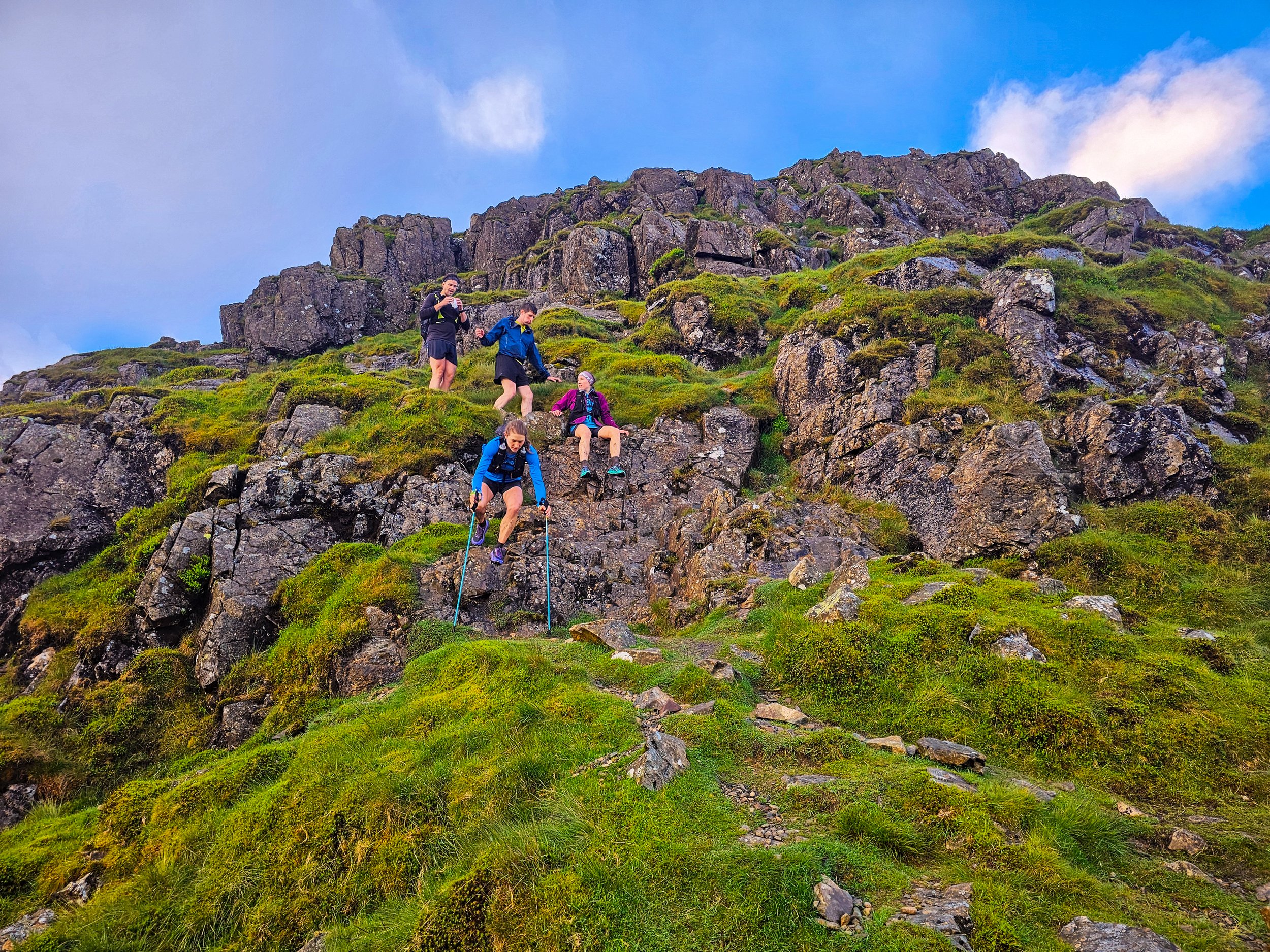
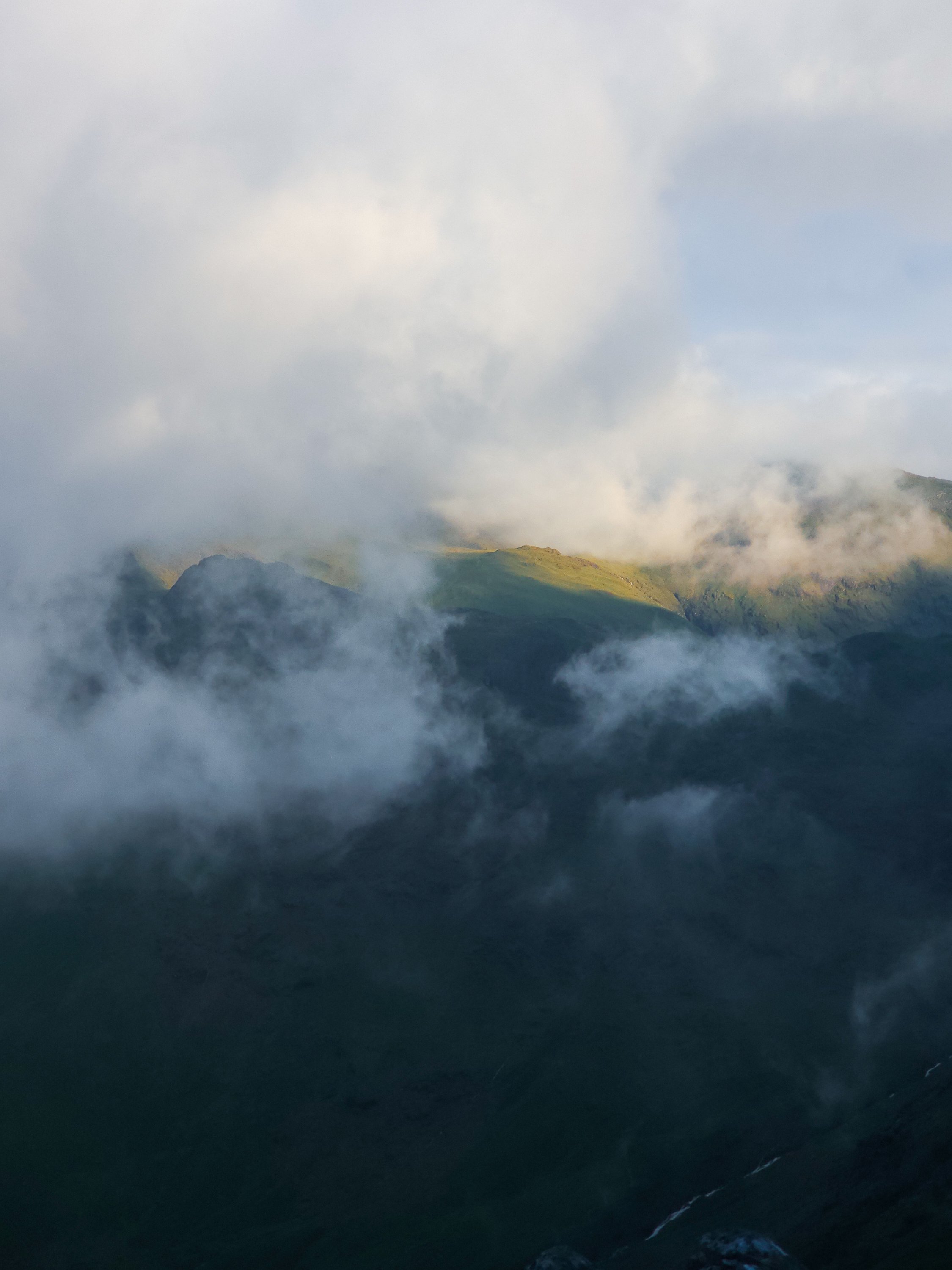
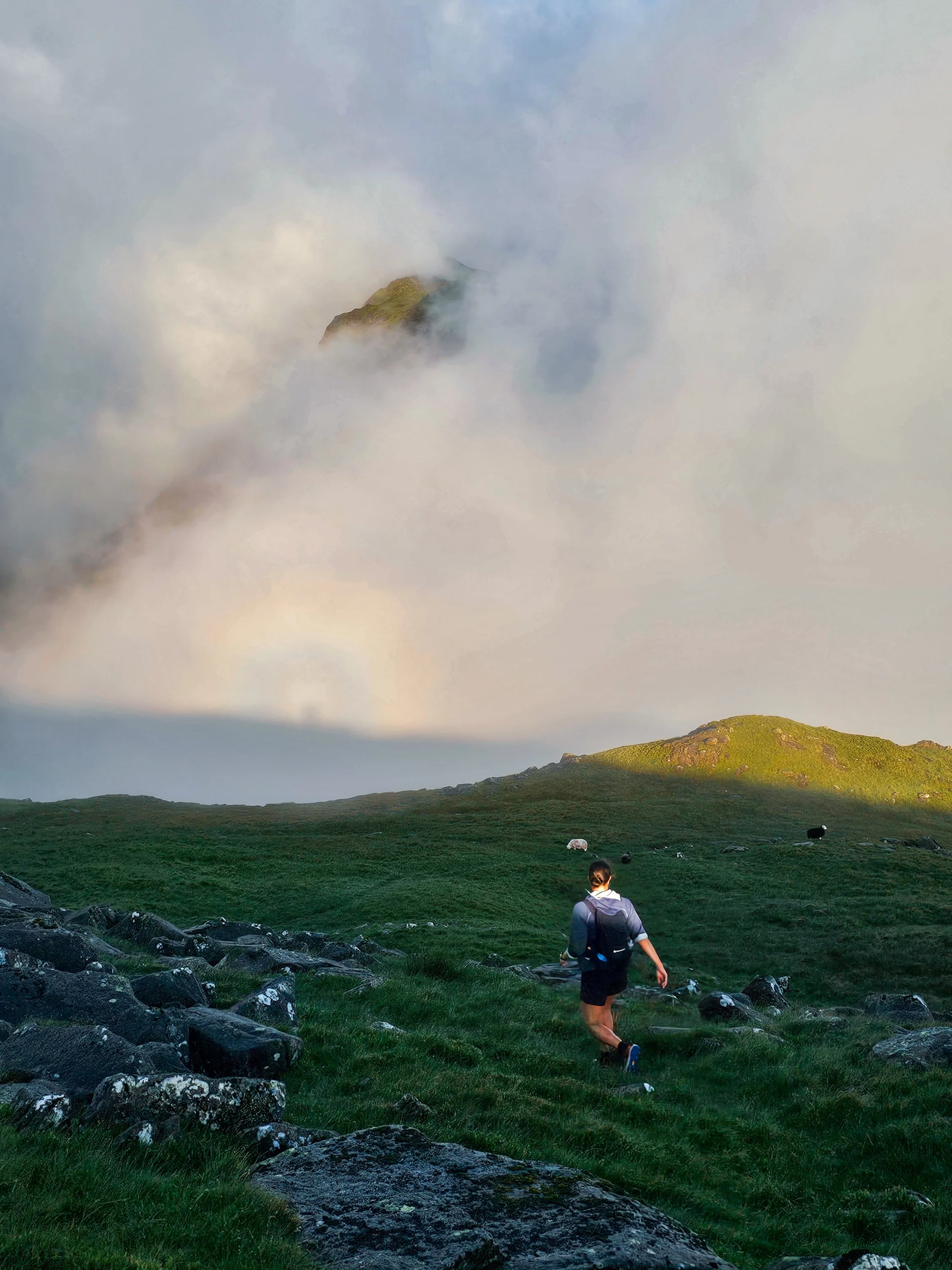
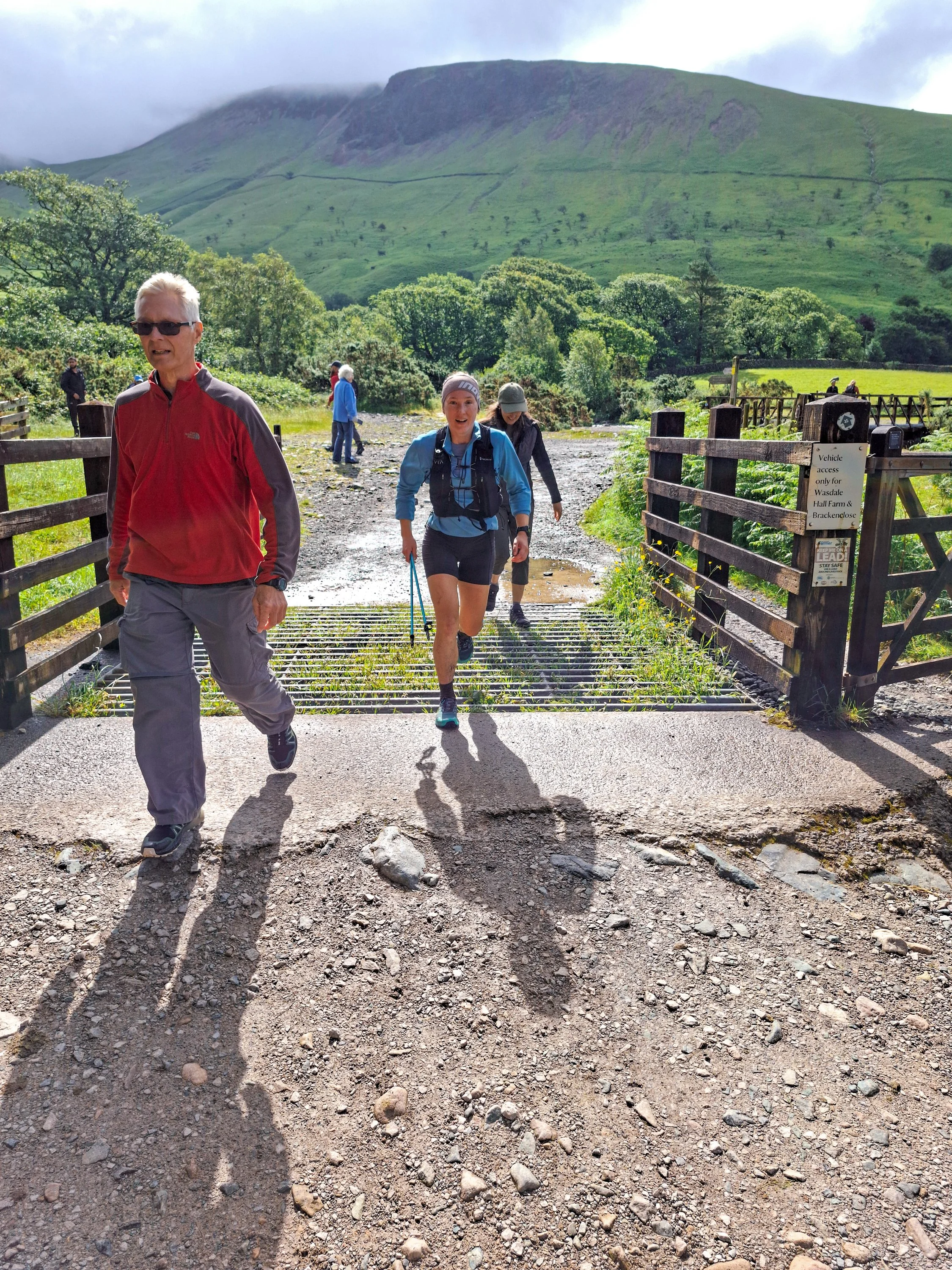
The rain disappeared. The cloud started to lift. Wisps of mist drifted across the valleys and, at one point, we were even treated to a brocken spectre – one of those rare mountain phenomena that feels almost magical when you encounter it in person.
Suddenly the landscape revealed itself.
The section between Yewbarrow and Great Gable was particularly unforgettable. Under blue skies and with near-perfect visibility, the Western Fells seemed to stretch endlessly in every direction. These were mountains I knew from maps and previous visits, but seeing them unfold hour after hour under my own feet felt entirely different.
When I create contour map artworks, I'm often trying to capture exactly that feeling: not simply a place, but the experience of being there. The memory attached to a landscape. The way a ridgeline catches the light. The sense of scale that is impossible to communicate through numbers alone.
Perhaps that's why challenges like the Bob Graham resonate so strongly with me. They create a deeper relationship with a place.
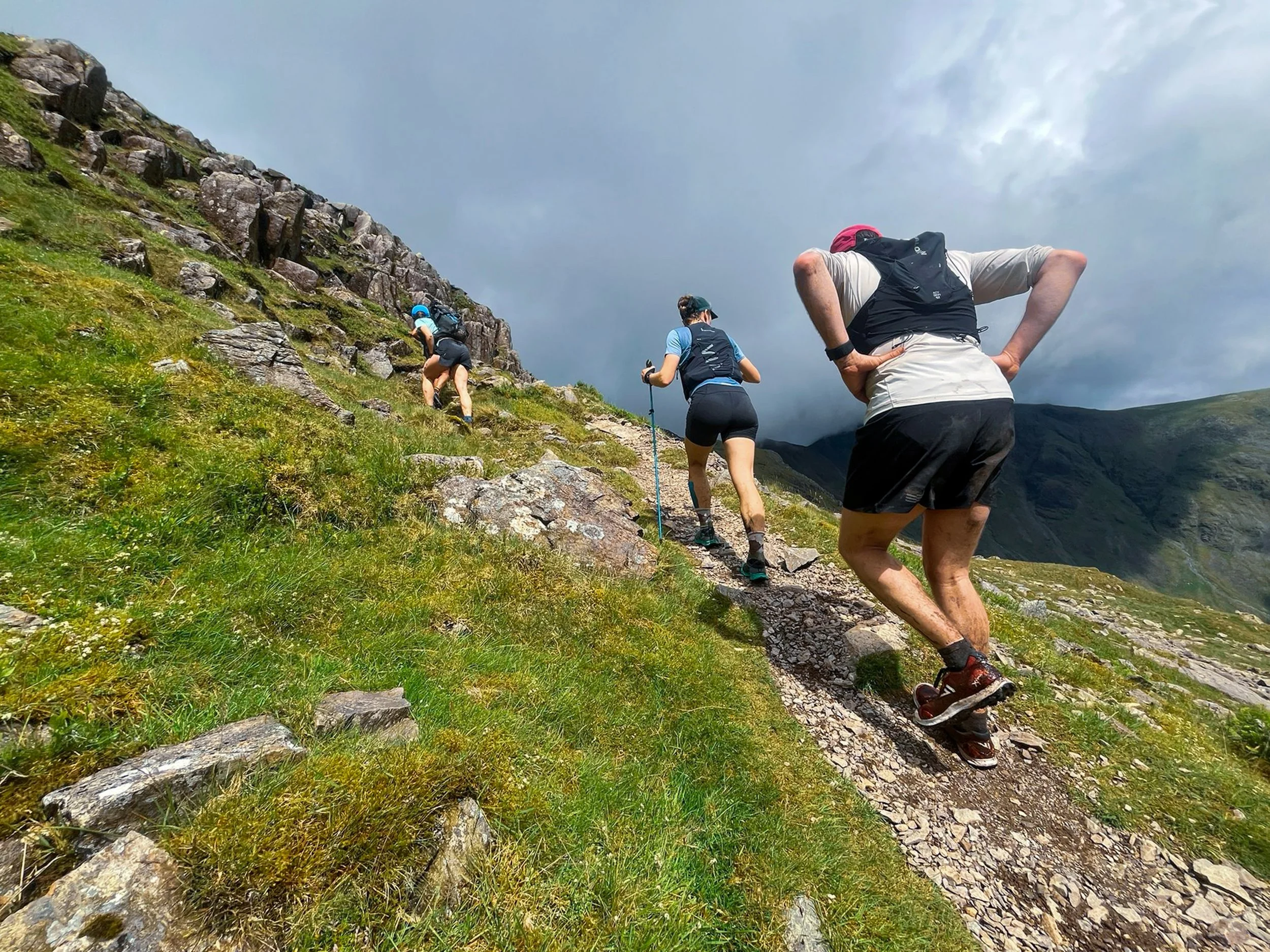
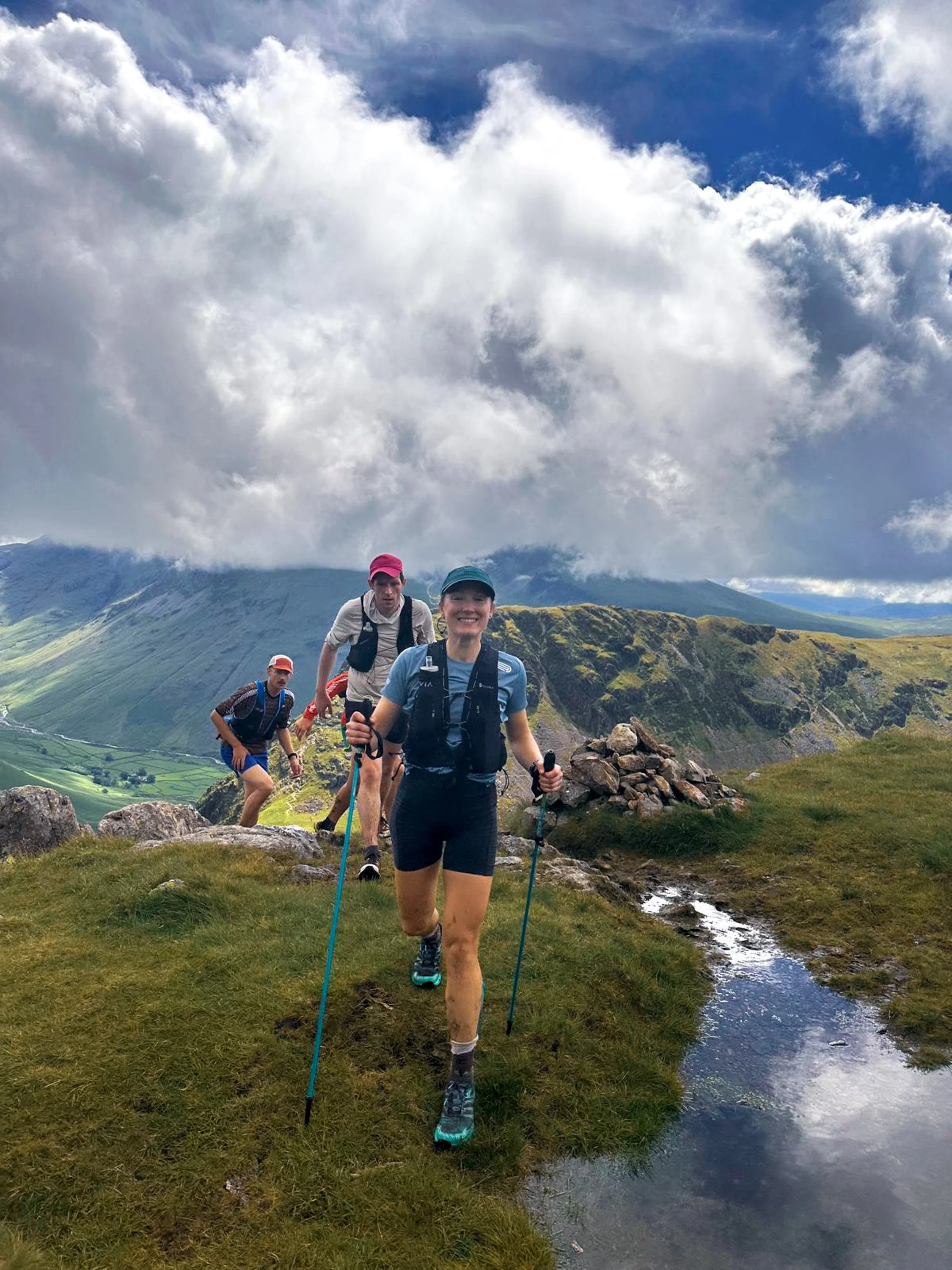
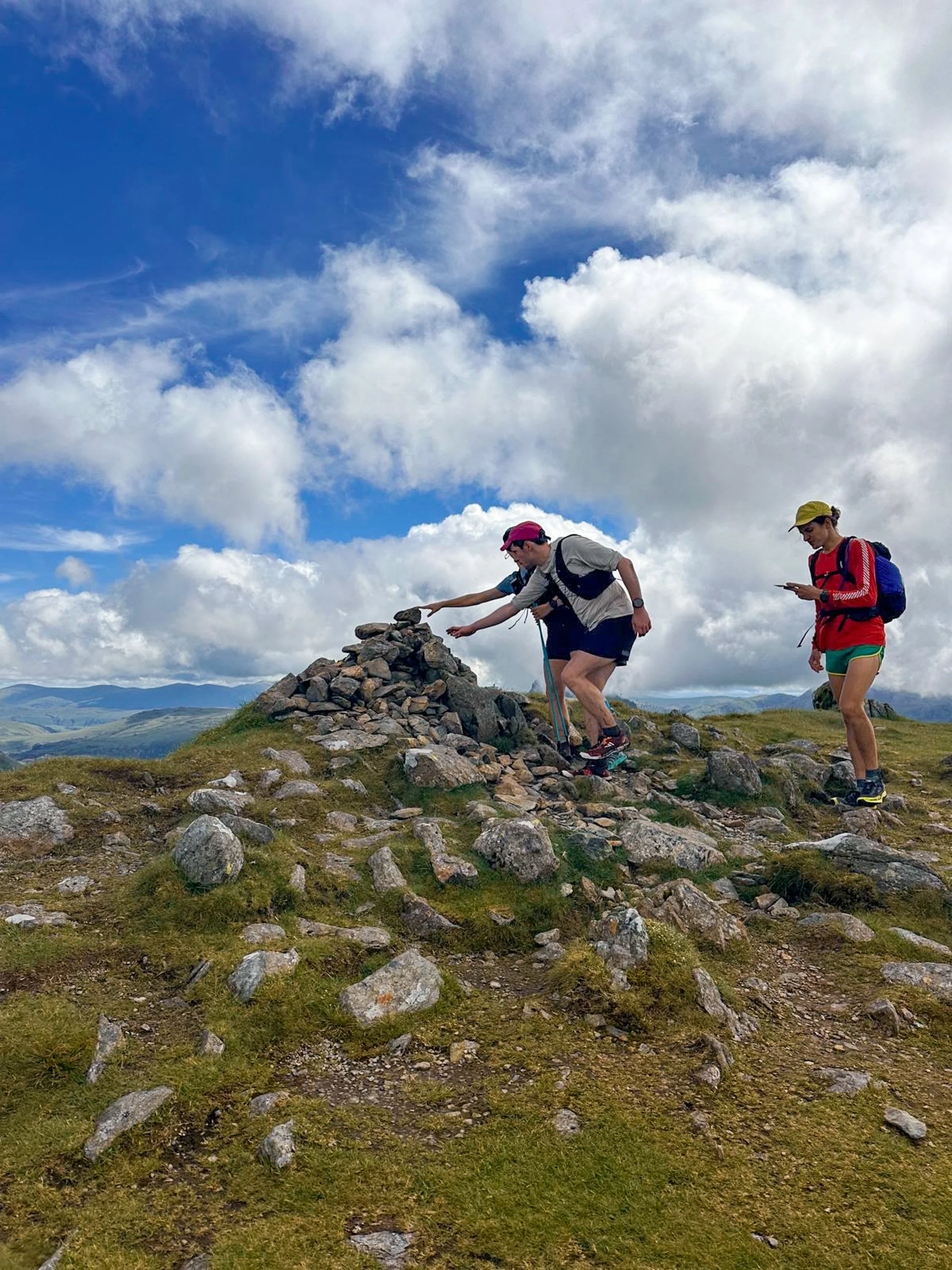
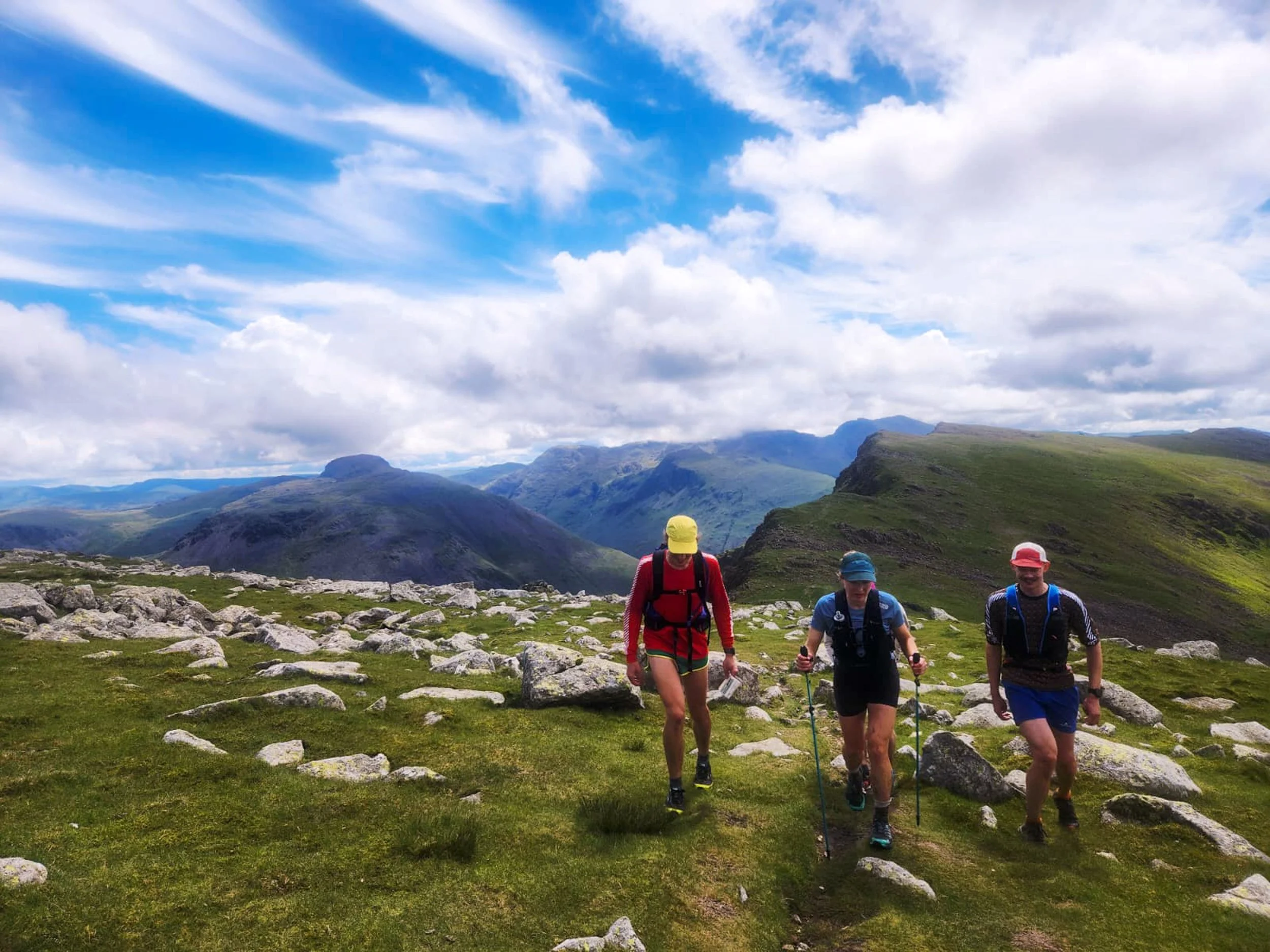
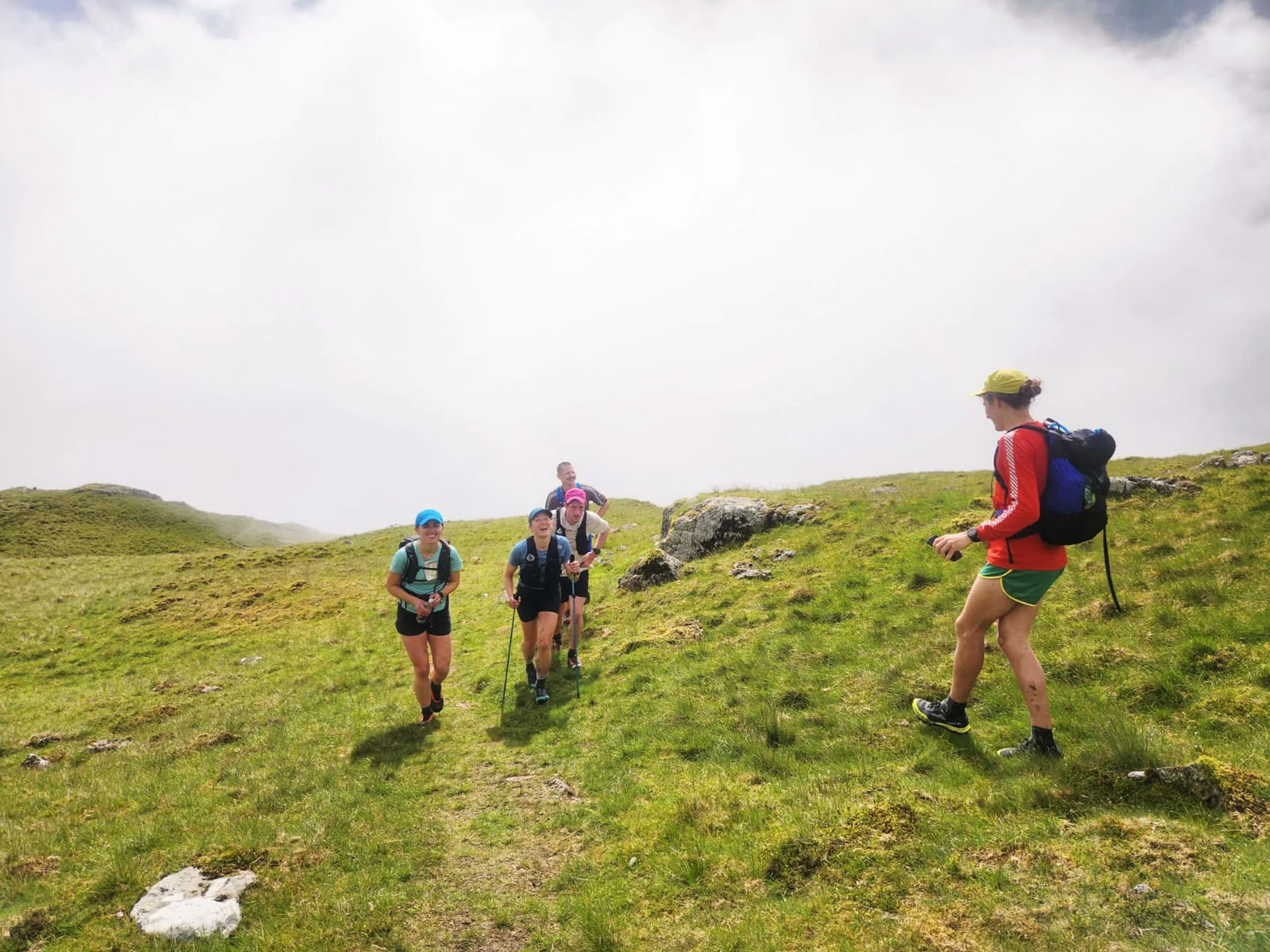
Of course, by this stage my legs had their own opinions.
Eating became increasingly difficult. Every climb felt a little steeper than the last. Every descent required negotiation. Yet somehow the summits continued to tick by.
The final leg brought one of the most memorable parts of the day.
Guy and I had spent much of the round together, and somewhere along the way we made a simple agreement: we'd finish together too.
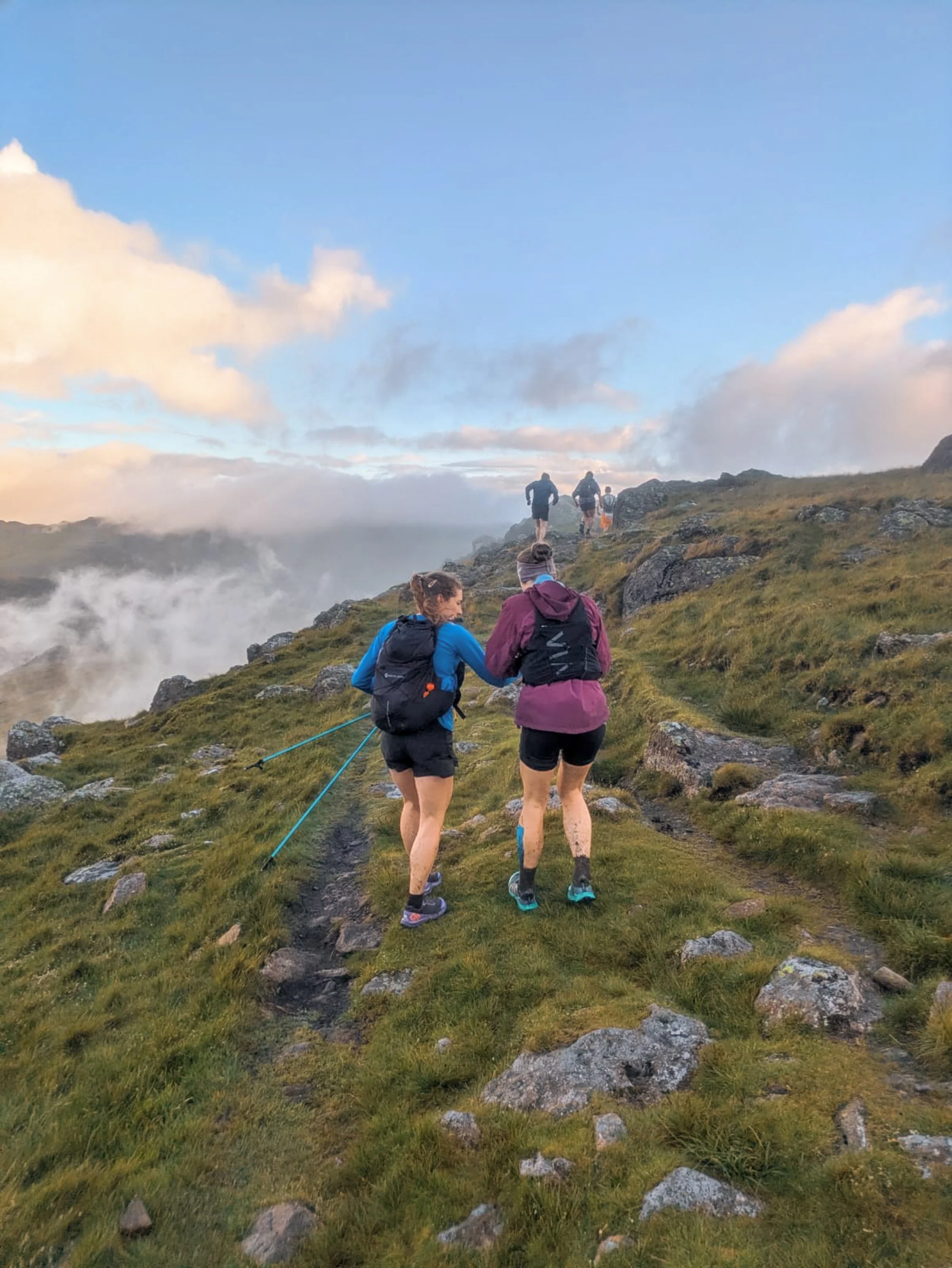
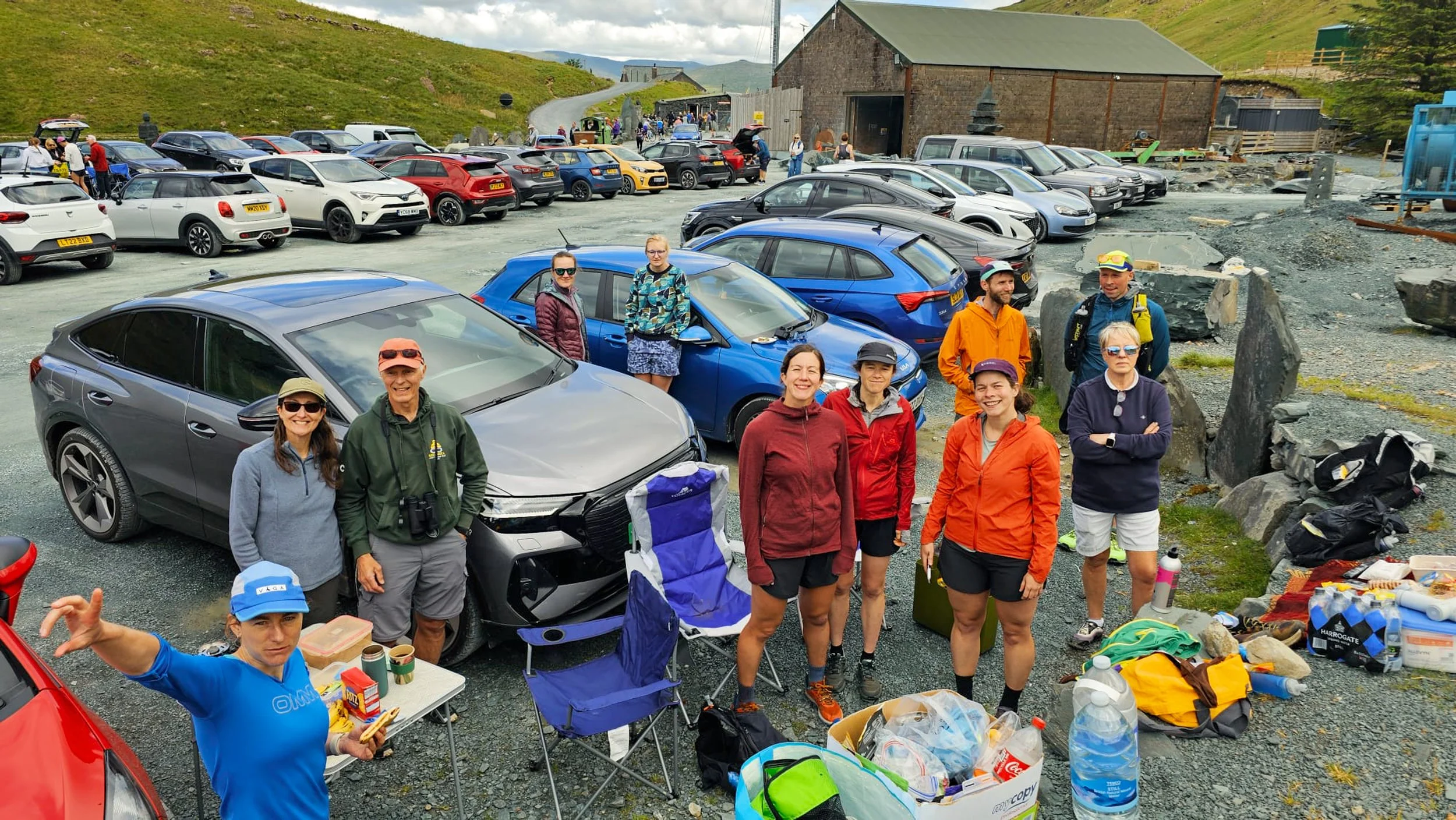
Supported by what felt like half of Dark Peak, we made our way over the final summits before descending towards Keswick. The last few kilometres on tarmac felt surprisingly brutal after so many hours in the hills, but eventually the Moot Hall came back into view.
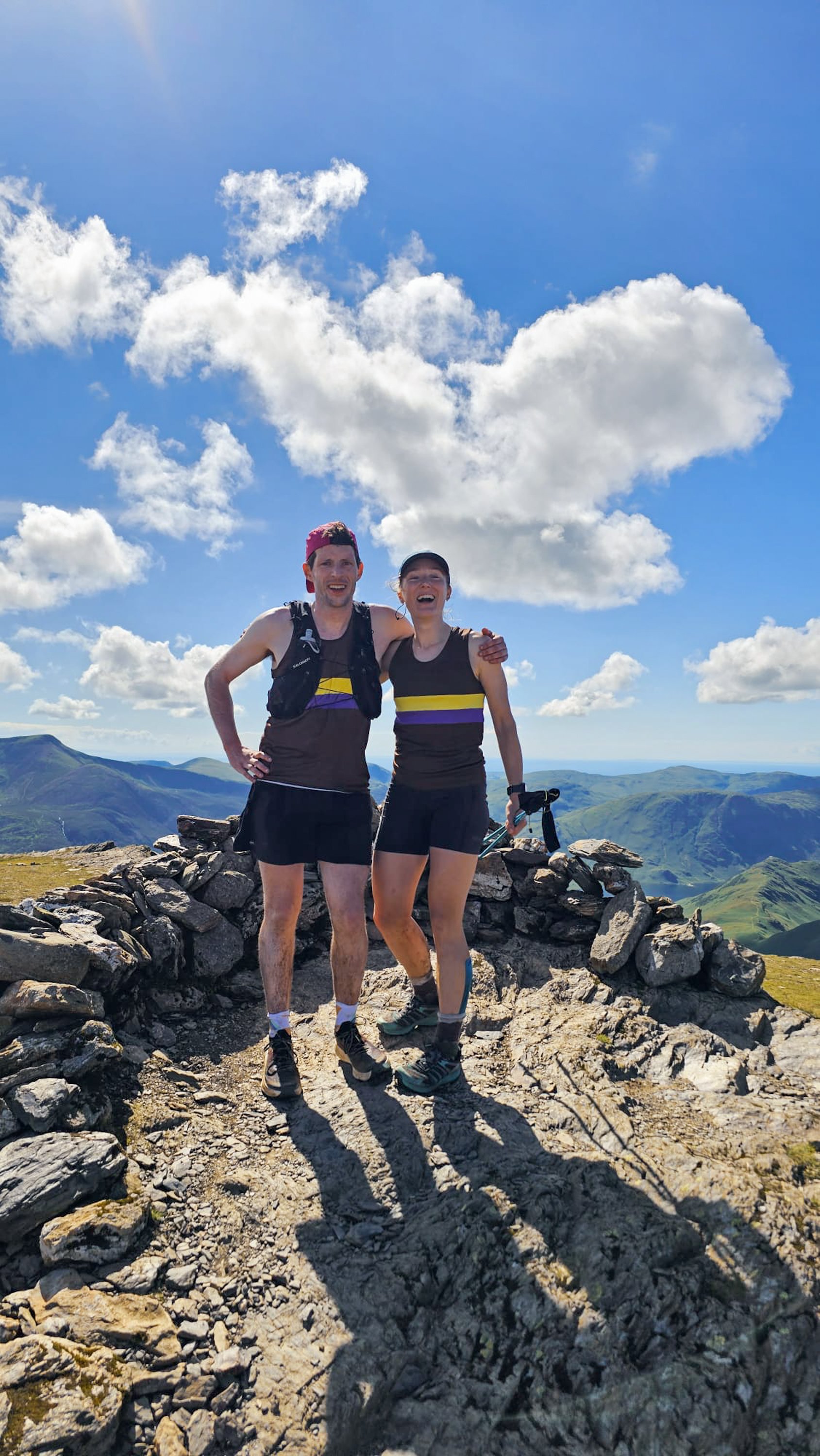
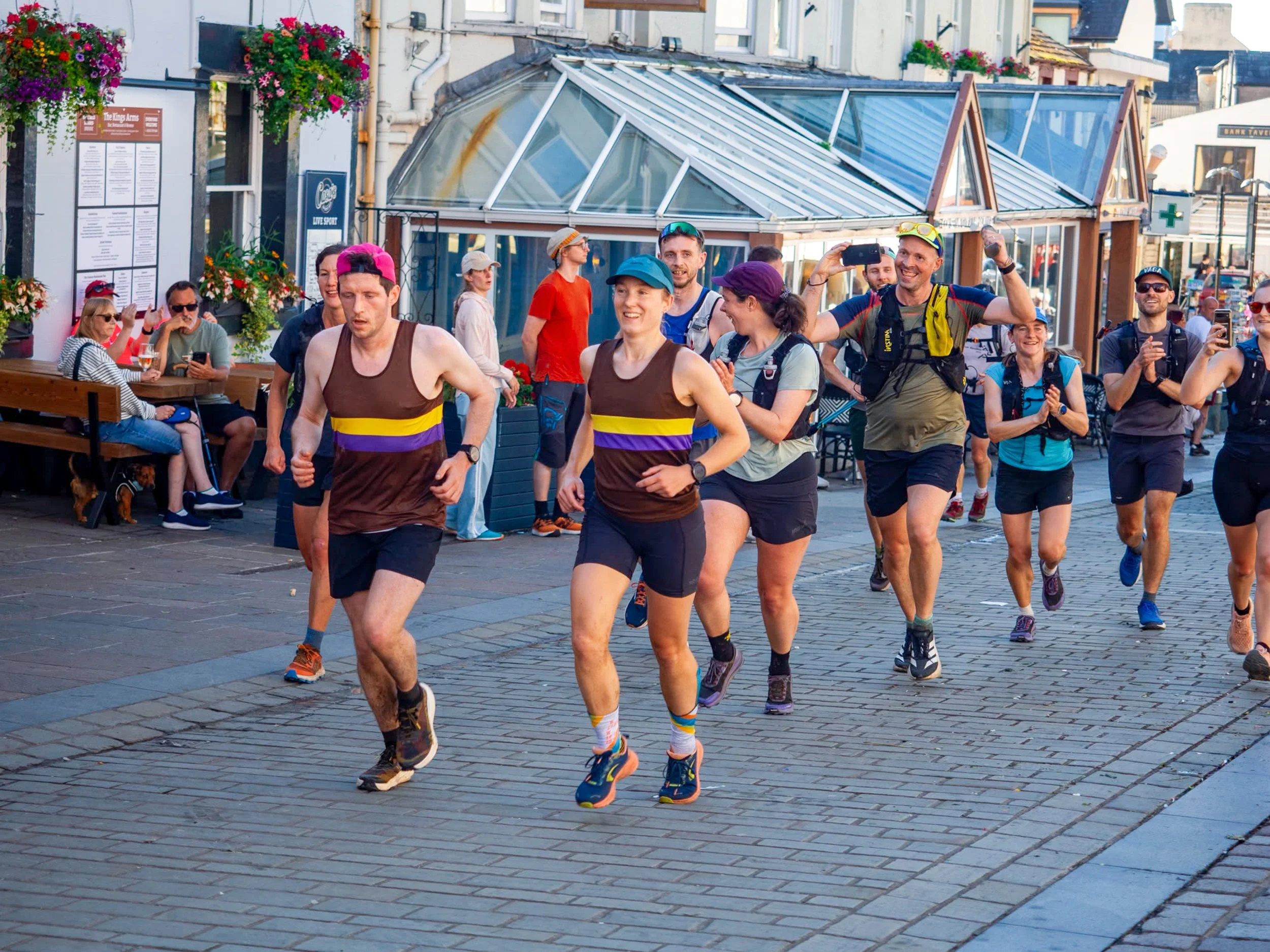
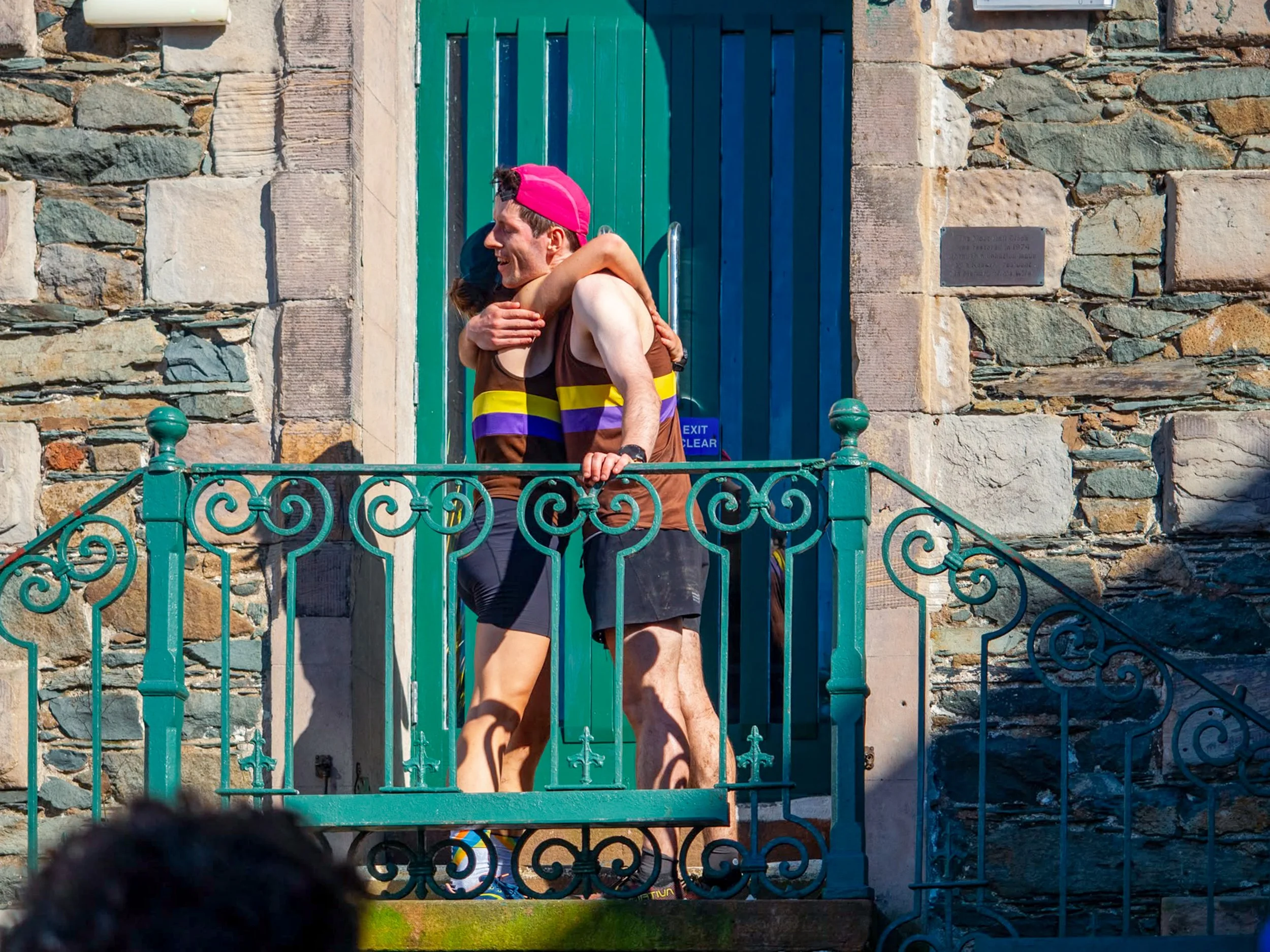
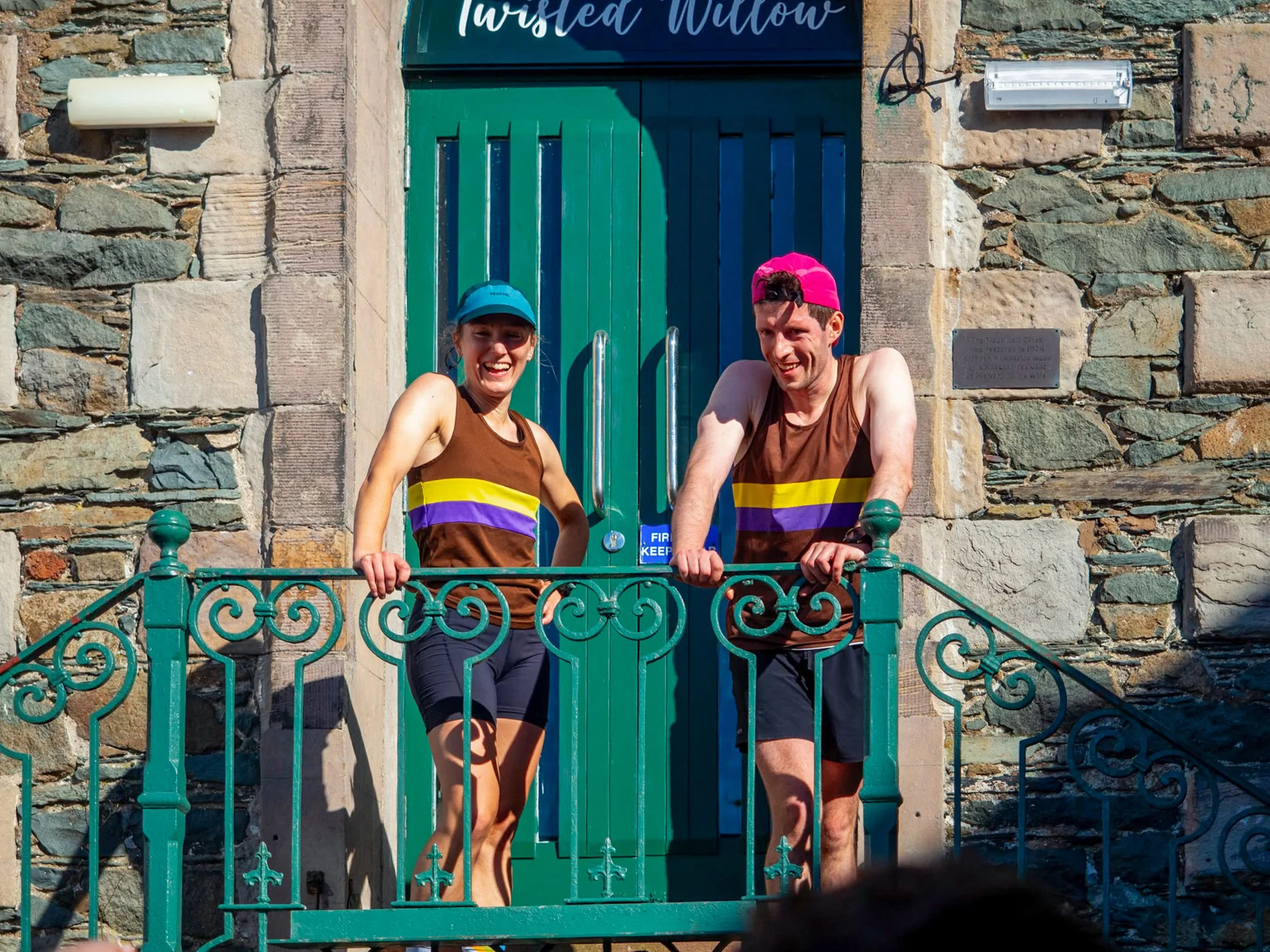
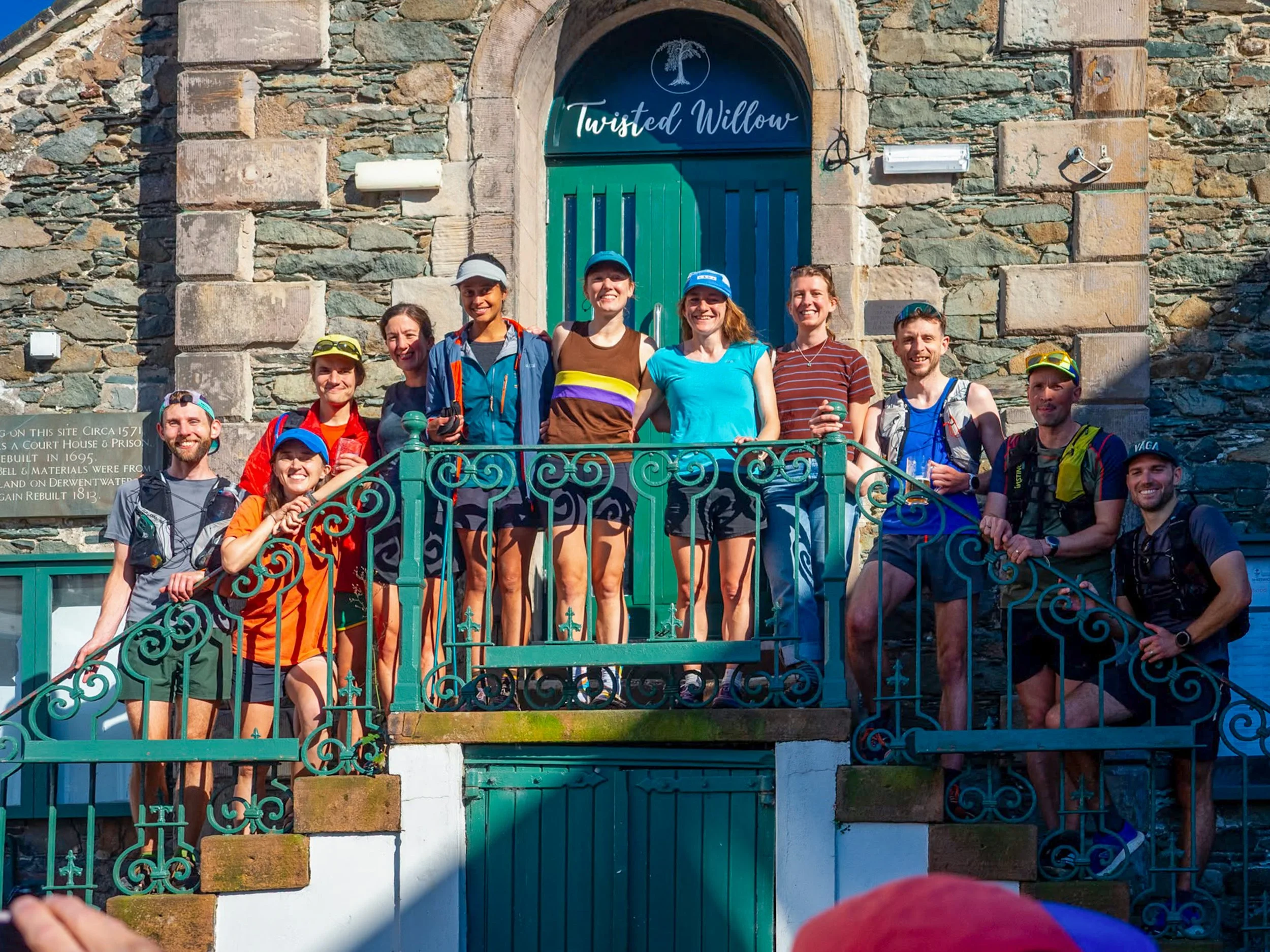
Twenty-three hours and twenty-five minutes after setting off, we climbed the steps, touched the famous door, and finished side by side.
People often describe the Bob Graham as an individual challenge. The way we did it, it felt anything but.
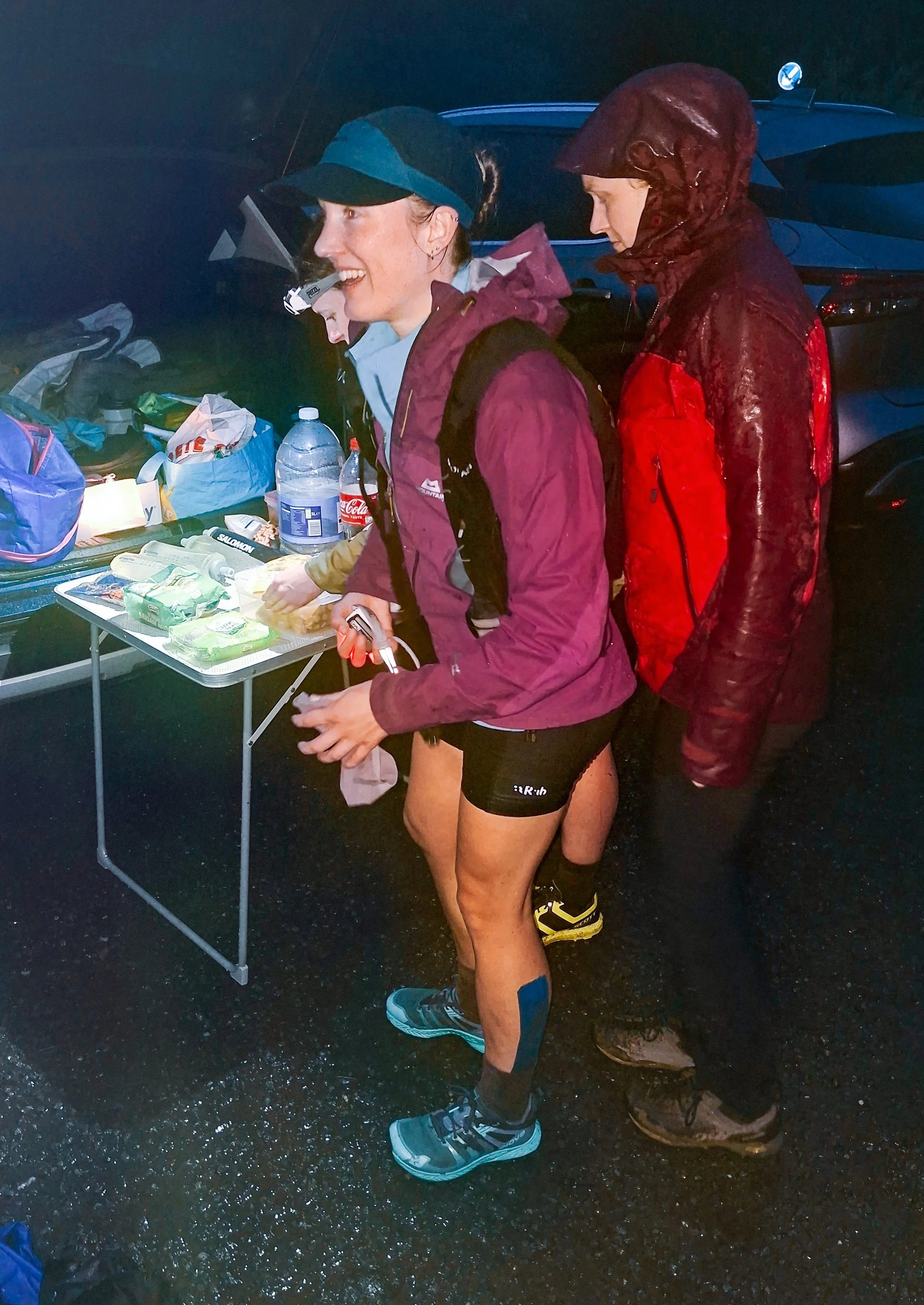
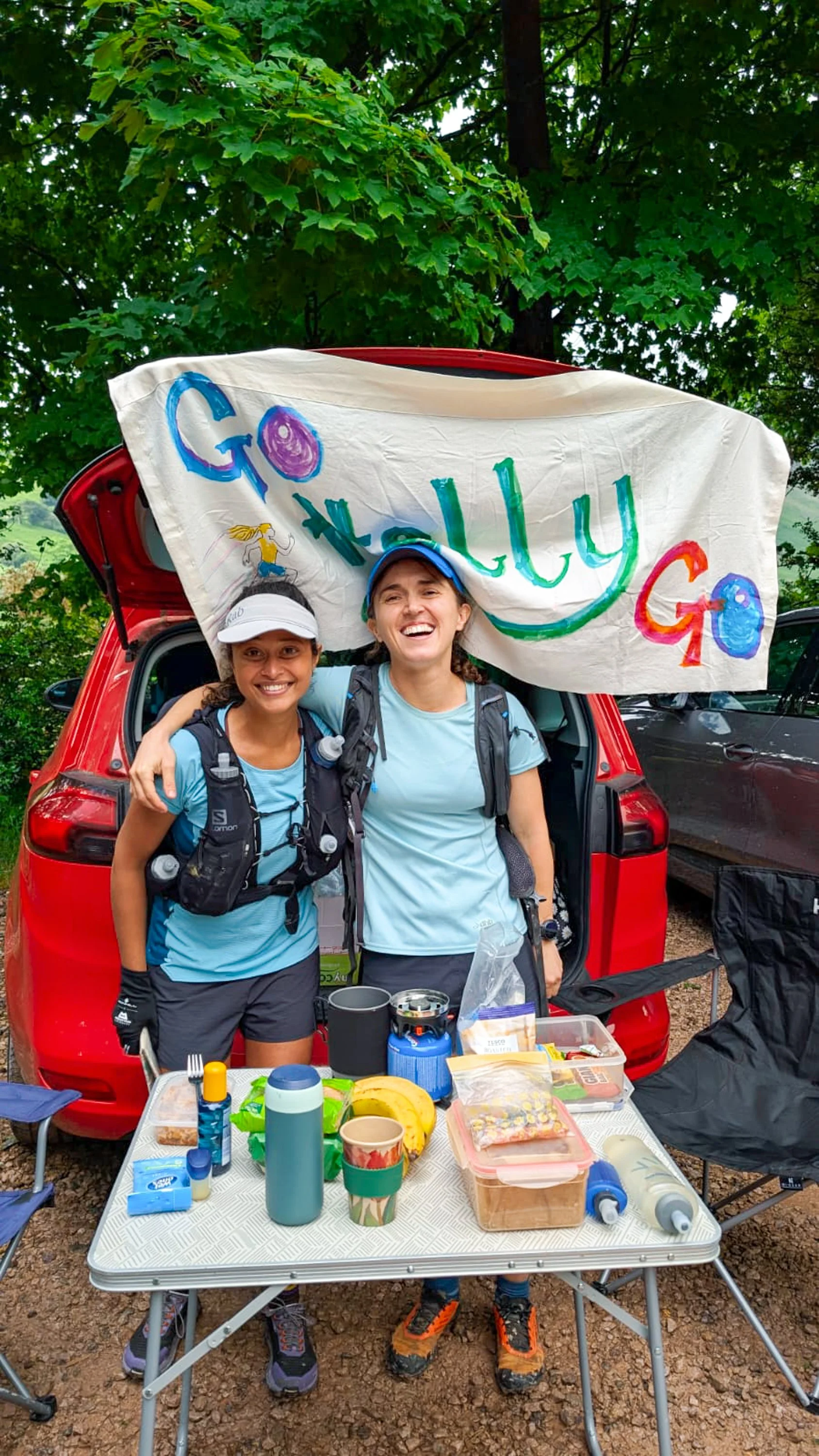
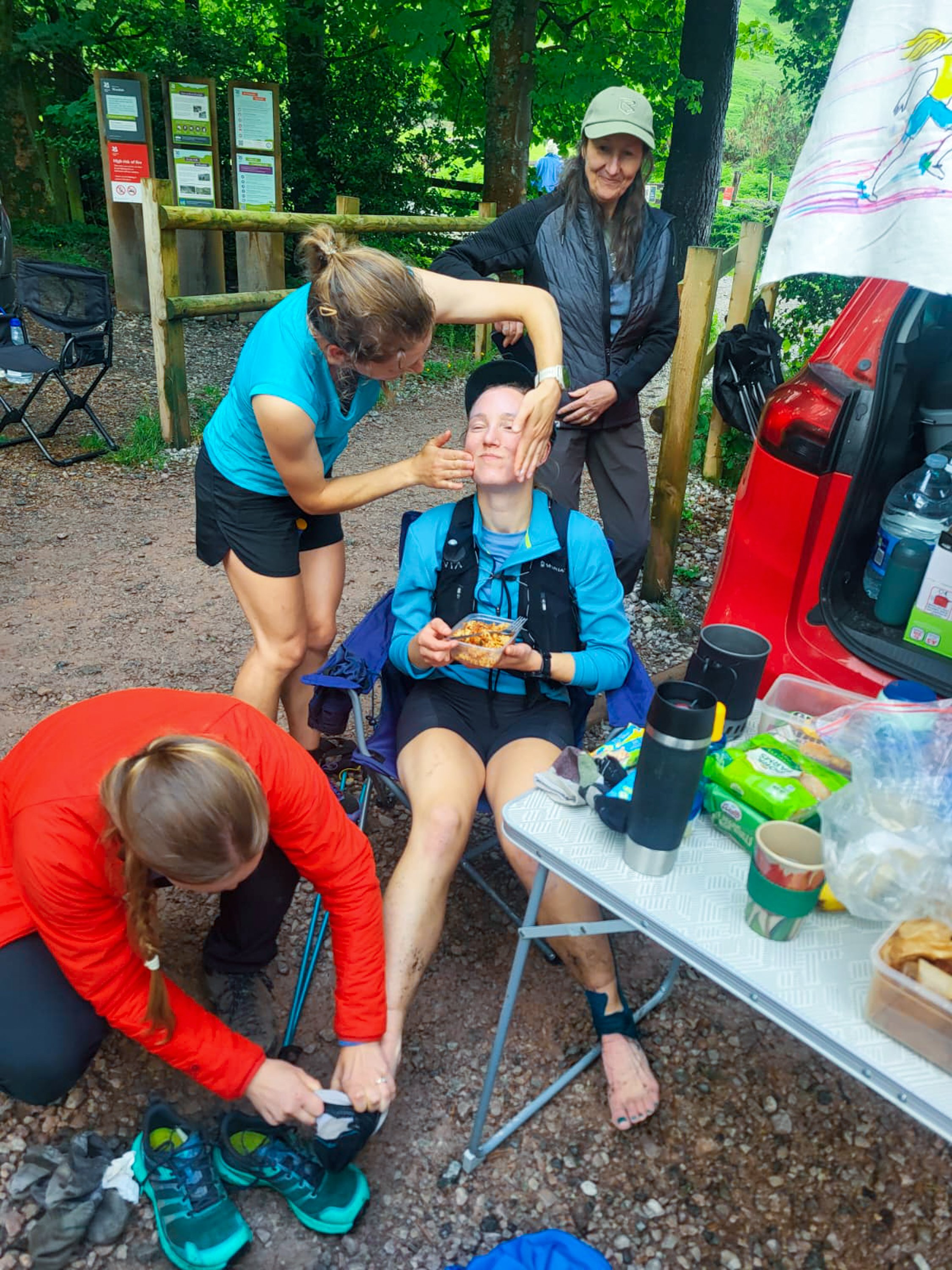
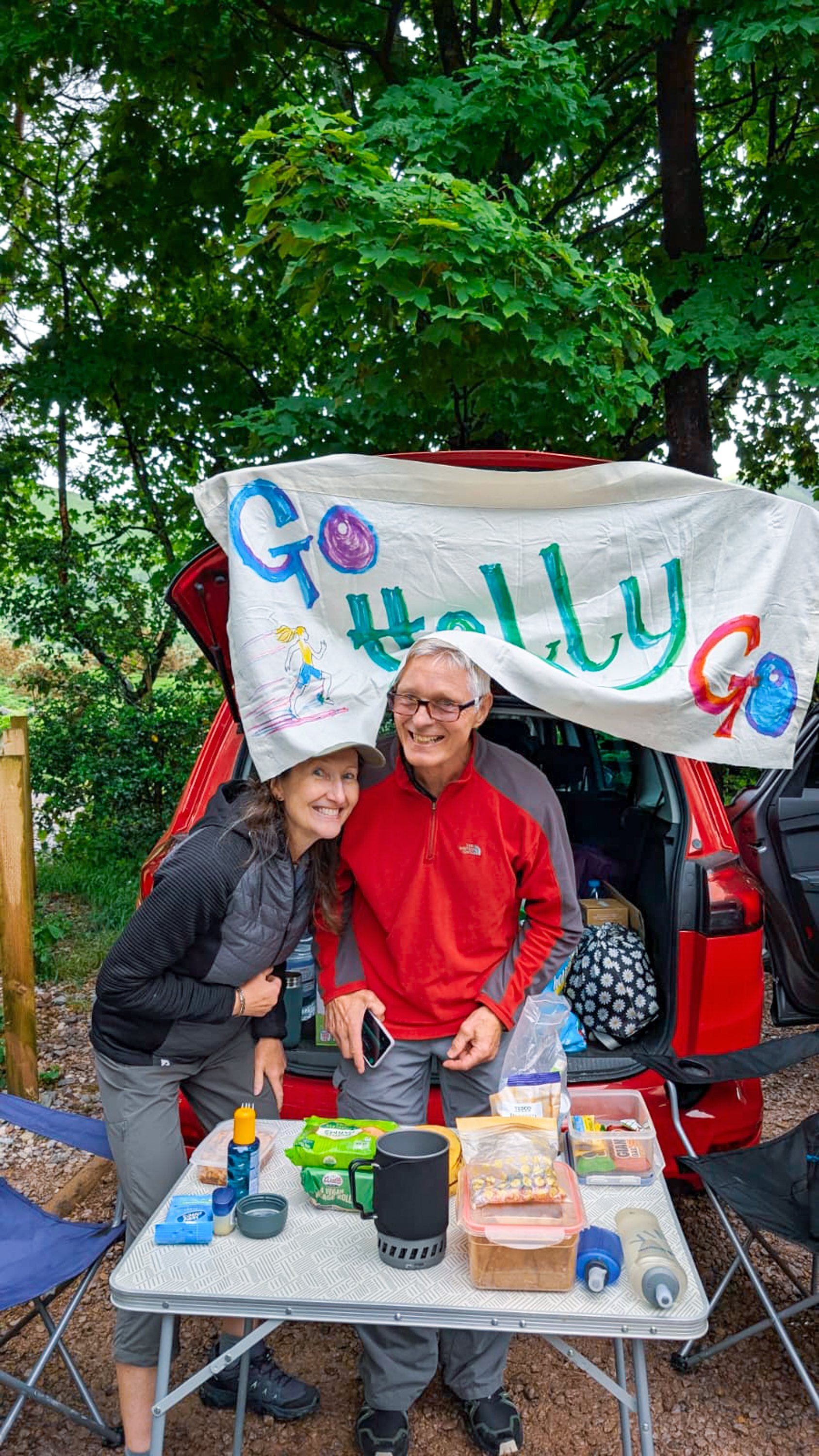
Behind most successful round is an enormous team of supporters carrying food, picking out the best lines underfoot, offering encouragement, solving problems and somehow remaining cheerful throughout. My family waited at road crossings, friends gave up their time to accompany me through the night and day. Fellow runners shared both the hard moments and the highlights.
The summits were incredible.
The landscape was unforgettable.
But it is the people I'll remember most.
And, perhaps, a renewed appreciation for just how much adventure can be hidden within a collection of contour lines.