
A Map of Home: The Netherlands Wall Map
For J, the Netherlands is more than the country where they were born. It is a place of roots, memory and belonging - a landscape that has remained a constant presence despite living in England since the age of four.
Although England has become home, J describes an occasional feeling of being “on the outside looking in”. Returning to the Netherlands at least twice a year provides a sense of stability, even if those visits also bring a complicated mixture of comfort and conflict.
“I am at home here,” J explains, “but I am sometimes on the outside looking in.”
A childhood landscape
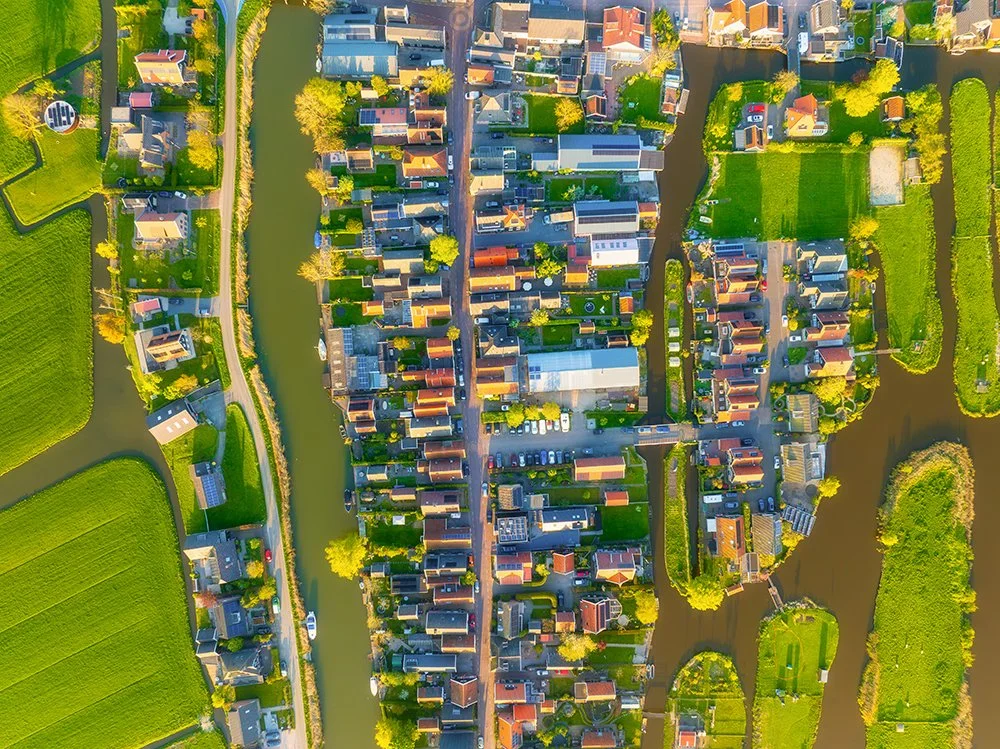
The memories J carries of the Netherlands are particularly rooted in one village and its landscape. Most vividly, they remember the harbour and the dyke on which their family home stood.
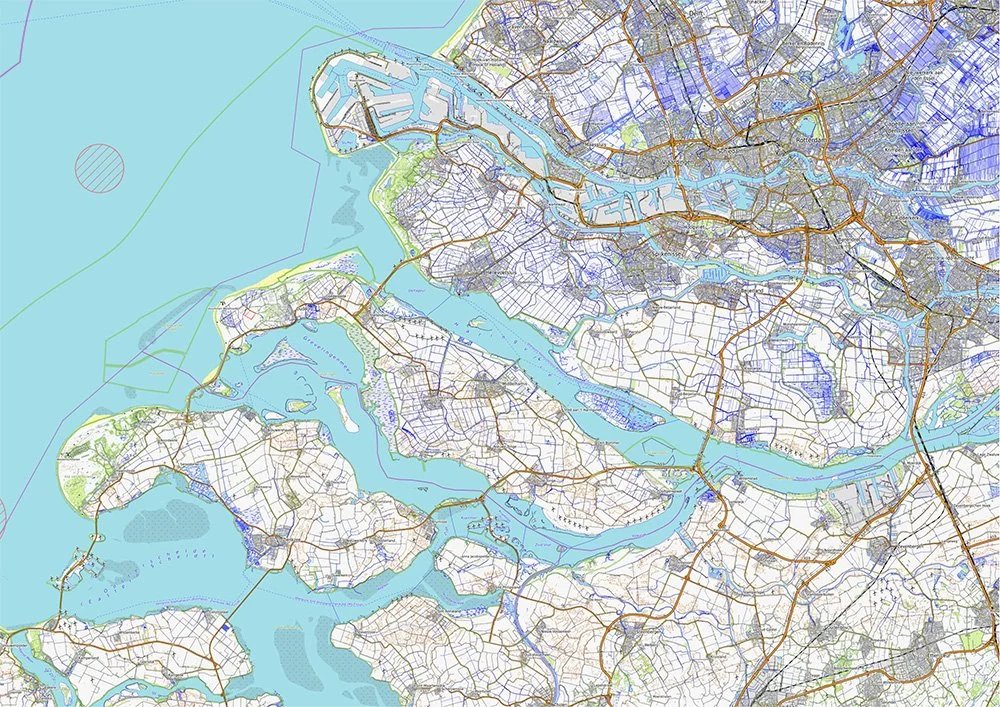
The Netherlands is often associated with its famously flat landscape, but for J, flat certainly doesn't mean bland. There is a striking contrast between the country's rapidly developing urban areas and its smaller villages and less industrialised places, where a strong sense of history and identity remains.
“In the urban areas there is a sense of moving at pace into the future,” J says, “but in the small villages and lesser industrialised areas there’s a sense of time and place not being intimidated by progress.”
Their memories of summer are filled with heat and dry weather, the distinctive smell of petrol from the petrochemical industry surrounding the village, and the sound of ships passing one another on the river.
One particular memory has stayed especially vivid: J, aged just four, running along the top of the dyke to escape a telling-off from their grandmother. It’s a wonderfully ordinary childhood memory, but one that has become part of the emotional landscape of home.
Returning to where it all began
J continues to return to the Netherlands at least twice a year. The country brings a sense of familiarity and stability, but their relationship with it has changed over time.
Since losing their mother, J finds themselves more homesick than when they were younger. The pull towards the place where they were born - and towards the memories associated with it - has become stronger.
There is a sense of being connected to two places at once: England, where J has spent most of their life, and the Netherlands, where their earliest roots remain.
A country captured in contour
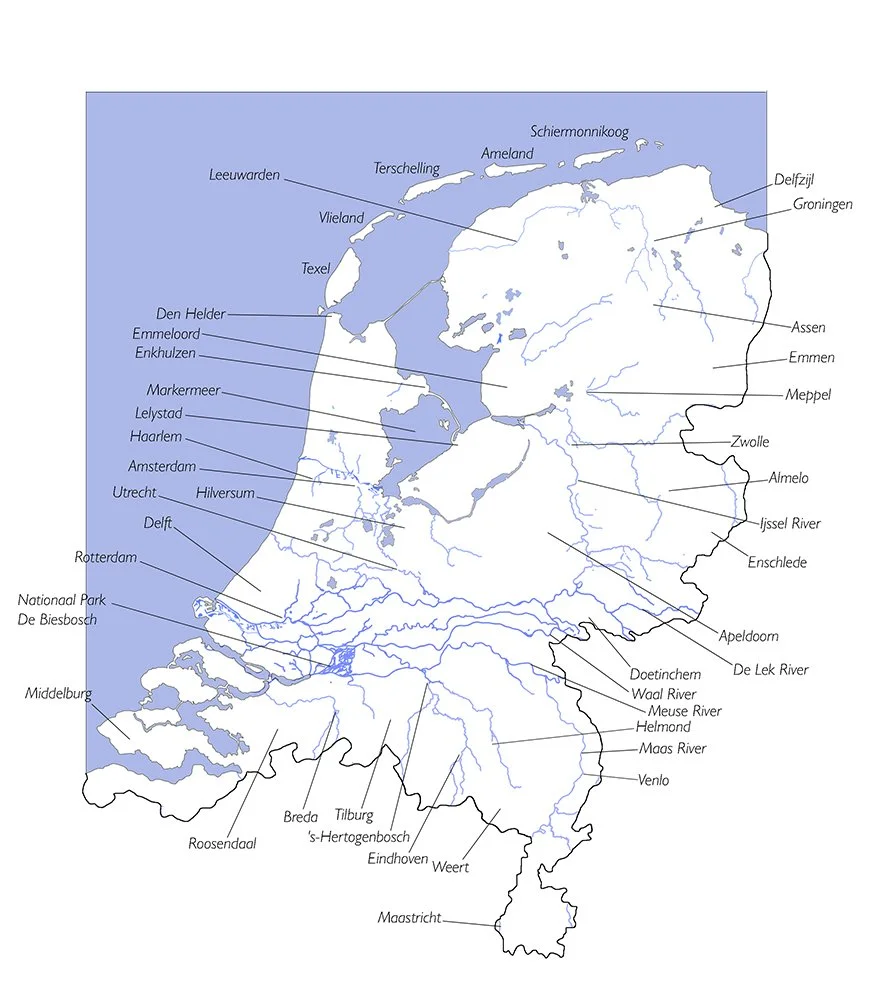
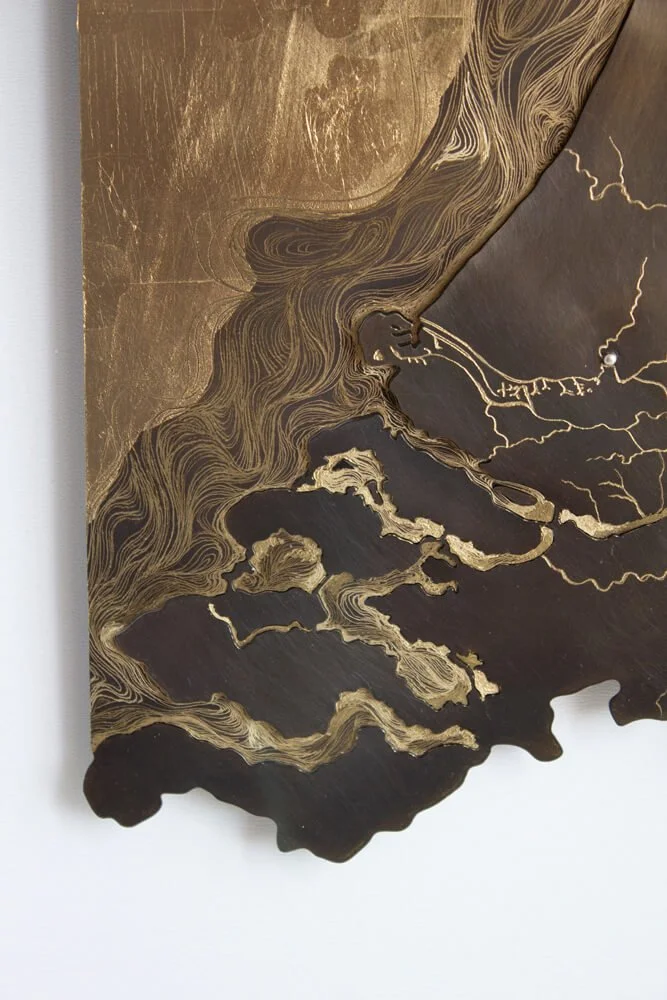
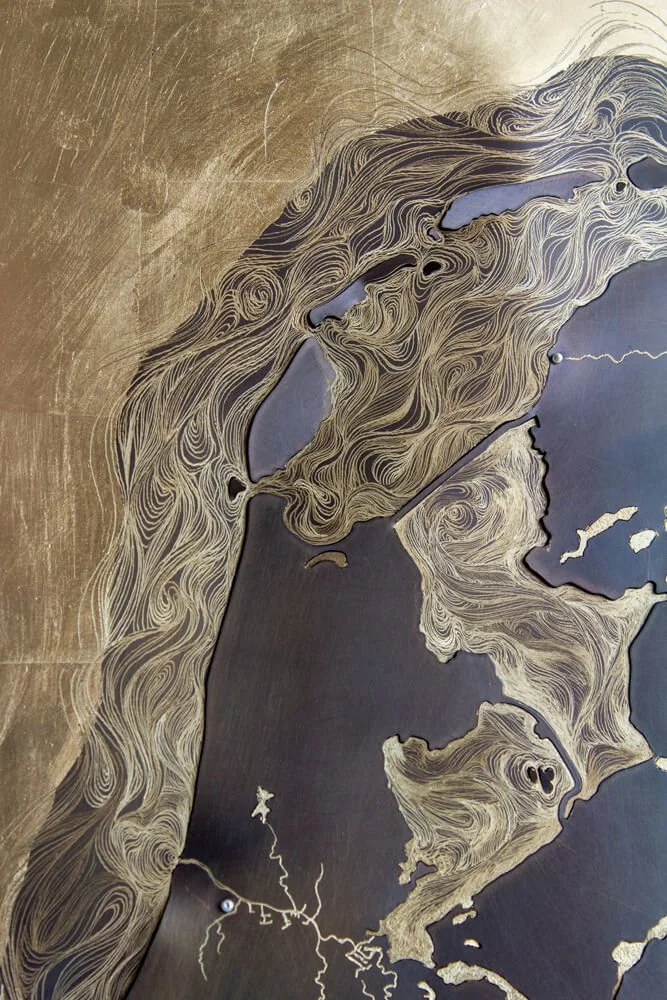
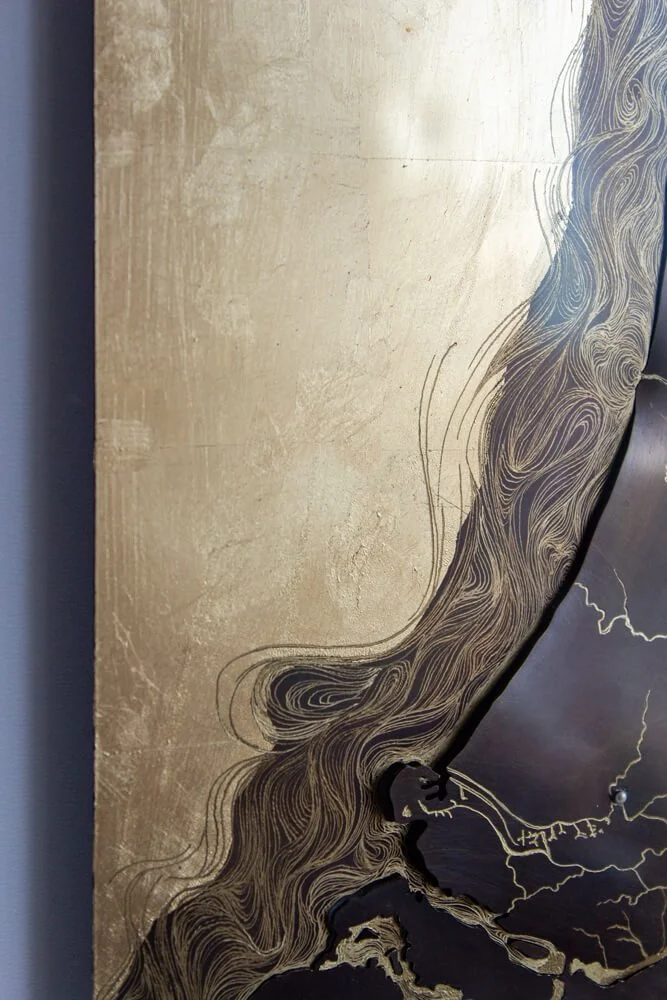
When J began considering a piece of artwork to represent this connection, a contour map felt like a natural choice. Rather than focussing on a single village or location, the map captures the Netherlands as a whole, with its intricate network of rivers and waterways picked out across the country.
“Seeing the country laid out in a solid state with the rivers and waterways standing out draws me in and I feel connected even though I’m not there.”
There is something particularly powerful about seeing a familiar landscape transformed into a physical object. The map is solid and permanent, yet represents somewhere that can never truly be held.
The design process became a collaboration between J and myself, with conversations and emails helping to shape a piece that reflected not just the geography of the Netherlands, but J's personal connection to it.
A map of memory
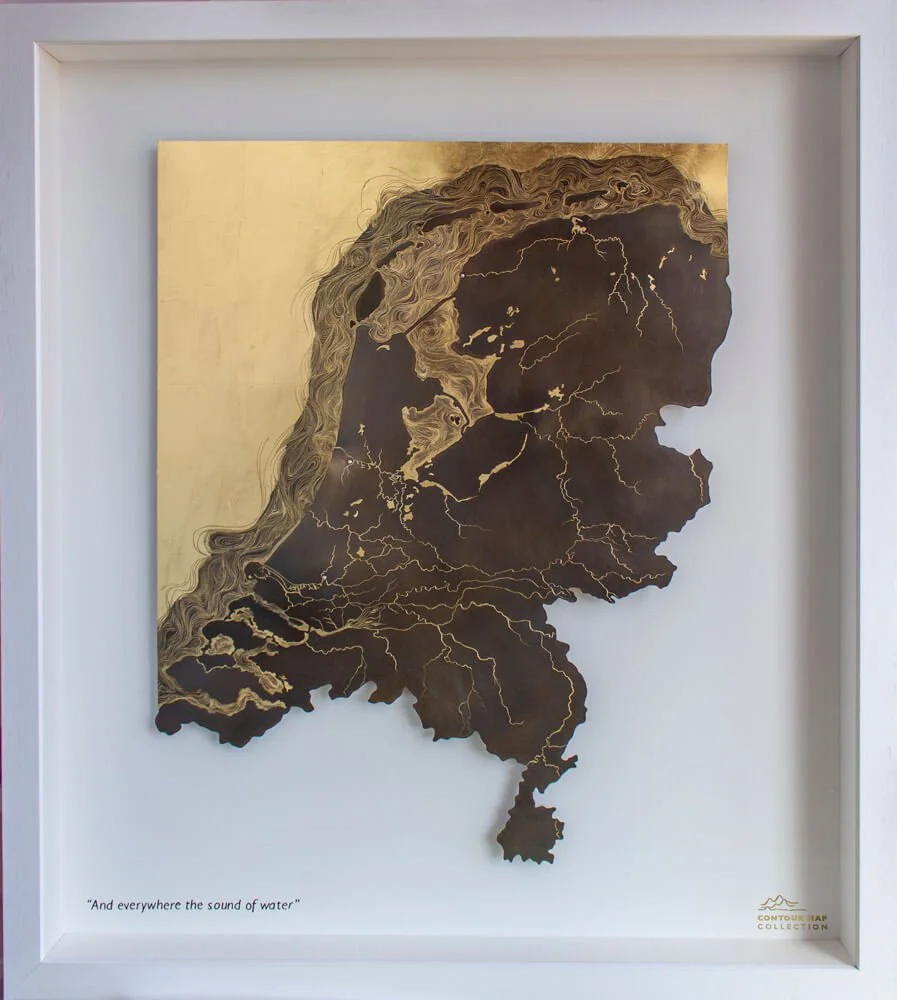
Today, the finished map hangs at eye level in J's workroom, where they can see it every day.
Visitors usually ask the same two questions: “What is it?” and “Who created it?”
For J, however, the map represents something much more personal. They don't feel that the artwork has changed the way they think about the Netherlands or their memories of it. Instead, it feels like a perfect representation of what they remember, and importantly, what they want to remember.
For J, the hope is that the map will continue to provide that connection for years to come, particularly when travelling back to the Netherlands is no longer possible. It is a piece of their birthplace, held in metal: a permanent reminder of the landscape where their story began, and of the sense of home that has never quite left them.